
"16th century"
500 article(s) found

A machine that grinds coffee beans manually-how to cook coffee beans without a machine
Hand-ground coffee machine coffee was planted by Arabs in large numbers in the 12th and 3rd centuries, and the world's first coffee shop was born in Damascus in the Middle East in the 16th century (1530). In just a few years, from the ancient Constantinople to the Caucasus, from the Persian Gulf to Budapest, and more than 200 cities throughout the empire, there were different numbers of coffee shops.

Real mellow thickness of Ugandan coffee flavor taste manor characteristics of boutique coffee beans
There was an emirate called Kitala in present-day western Uganda before the 13th century AD. In the 13th and 14th century, the nomadic Bachwezi conquered the country. From the end of the 15th century to the beginning of the 16th century, the Luo people who originally lived in southern Sudan went south to replace the rule of the Bachwezi, established the kingdom of Buniolo and established the Babito dynasty in Buganda. These foreign rulers were soon engaged in local farming.

16 little things about coffee
Professional coffee knowledge exchange more coffee bean information please follow the coffee workshop (Wechat official account cafe_style) 16 little things about coffee can you remember the last day when you didn't drink coffee? I'm afraid it's difficult, because coffee has become a part of our life, but there are still a lot of knowledge about coffee, some of which are quite interesting. 16 items of coffee 1. In Turkey

The Origin, Development and History of Zhengshan Race Black Tea A short story about Jin Junmei's origin
The colorful history of black tea there is still a lot of debate among tea scholars about when black tea was invented. What we can be sure is that by the 16th century, black tea began to appear in China's tea market.

Yemeni Coffee learn the historical story of Yemeni mocha coffee.
Professional barista communication please follow the coffee workshop (Wechat official account cafe_style) Yemeni coffee: when it comes to coffee, people think more of "refreshing". It is also for this reason that coffee has spread widely in Yemen. Between the 15th century and the 16th century, that is, during the Ming Dynasty in China, a famous hot drink became popular. It is said that an imam of Mocha in Yemen at that time and

Uganda coffee varieties producing area characteristics boutique coffee beans flavor estate introduction
There was an emirate called Kitara in western Uganda in the 13th century AD. In the thirteenth and fourteenth centuries, the country was conquered by the nomadic tribe of the Bachivezi. From the end of the 15th century to the beginning of the 16th century, the Luo people originally residing in southern Sudan moved south to replace the rule of the Bachiwezi people and established the Kingdom of Bunoro and the Babito Dynasty in Buganda. These foreign rulers were soon employed locally as farmers

Introduction of Salvadoran Coffee Variety and Flavor description characteristics of producing area introduction of high-quality coffee beans
The city of El Salvador has a large number of 16th-century buildings and religious buildings, many of which are decorated with 17th-and 18th-century carvings and stripes made of colored mud, reflecting the characteristics of the colonial period. Its overall characteristics are described through a forest of monuments and consistent ideas. All this shows that El Salvador is a city with a suitable structure for the colony.

Yemeni Coffee introduces the relationship between Yemeni coffee and Yemeni mocha
Professional barista communication please follow the coffee workshop (Wechat official account cafe_style) Yemeni coffee: when it comes to coffee, people think more of "refreshing". It is also for this reason that coffee has spread widely in Yemen. Between the 15th century and the 16th century, that is, during the Ming Dynasty in China, a famous hot drink became popular. It is said that an imam of Mocha in Yemen at that time and

World & A brief introduction to the Development History of Coffee in China
Origin: coffee was first discovered in the kaffa region of southern Ethiopia in the 6th century AD. So far, there is no specific historical data about the origin of coffee, what has been handed down are several different legends, but it is more recognized that Cuddy, the shepherd, discovered the coffee. Legend has it that Kadi, a shepherd in Kafa province in southern Ethiopia, drives his sheep every day.
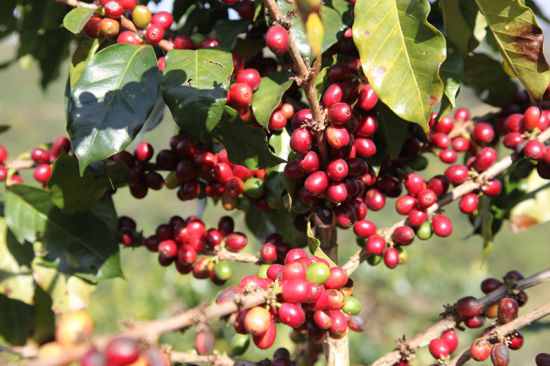
How to grow Arabica coffee beans, one of the most important coffee trees in the world?
Arabica species (scientific name CoffeeArabica). The origin of Arabica species is Ethiopia's Abyssinia Plateau (present-day Ethiopian Plateau). In the early days, it was mainly used as medicine, and in the 13th century it developed the habit of baking and drinking. It was introduced into Europe through the Arab world in the 16th century and further became a favorite drink all over the world.

Unveil the mystery of coffee allusions
Who first thought of roasting the seeds of coffee trees? And why?

The flavor and taste of Ugandan coffee with extremely light aroma introduction to the characteristics of boutique coffee in manor area
There was an emirate called Kitala in present-day western Uganda before the 13th century AD. In the 13th and 14th century, the nomadic Bachwezi conquered the country. From the end of the 15th century to the beginning of the 16th century, the Luo people who originally lived in southern Sudan went south to replace the rule of the Bachwezi, established the kingdom of Buniolo and established the Babito dynasty in Buganda. These foreign rulers were soon engaged in agriculture locally.

Confidence from Coffee countries: a brief talk on the Culture and Development History of Italian Coffee
Professional coffee knowledge exchange more coffee bean information please follow the coffee workshop (Wechat official account cafe_style) Italy, in people's perception is a literary, lazy, enjoy life of a country. When it comes to Italy, the first thing that comes to mind is the Renaissance. It took place during the ideological and cultural movement in Europe from the middle of the 14th century to the 16th century.

Smooth entrance Salvadoran coffee grind taste processing method Features Fine coffee introduction
Salvador has a large number of buildings from the sixteenth century and religious buildings, many of which are decorated with sculptures from the seventeenth and eighteenth centuries, and many of which are striped with colored clay, reflecting the characteristics of the colonial period. Its overall character is described by a forest of monuments and a consistent vision. All of this suggests that El Salvador is a city structured for colonization.
How much is a kilo of coffee beans? where can I buy coffee beans?
In a broad sense, there are two kinds of coffee beans in the world, Arabica beans and Robosta beans. The earliest Arab way to eat coffee was to chew the whole fruit (Coffee Cherry) to absorb its juice. Then they mixed the ground coffee beans with animal fat as a physical supplement for long trips, and it was not until about 1000 AD that the green coffee beans were used.
In the history of fine coffee, coffee first appeared on the table as a kind of wine.
Coffee first appeared on the table with wine and spirits in the early 17th century, when Europeans began to try to drink coffee. People have long known the nutritional value of beer. According to the book Food, Energy and Entertainment in British Agriculture by Cambridge Press, in the second half of the 16th century, a male mill worker drank an average of 4 quarts of beer a day.

Coffee culture Coffee spread track in the world
Coffee was introduced into Europe Islam prohibited drinking alcohol, but also from the side to promote people to drink a lot of coffee, in the 16th century, coffee in the name of Arabic wine attracted the attention of European countries. However, Arab countries are very strict with the export of coffee, and even require raw beans to be boiled before they can be exported. However, with the continuous development and frequency of trade, coffee in Europe in the mid-17th century.

The characteristics of Yemeni coffee introduce the origin of Yemeni mocha coffee.
Professional barista communication please follow the coffee workshop (Wechat official account cafe_style) Yemeni coffee: when it comes to coffee, people think more of "refreshing". It is also for this reason that coffee has spread widely in Yemen. Between the 15th century and the 16th century, that is, during the Ming Dynasty in China, a famous hot drink became popular. It is said that an imam of Mocha in Yemen at that time and

World Coffee History
In the sixth century, Ethiopian shepherds discovered red coffee fruits. In the eleventh century, Arab merchants spread coffee to Europe. In the 16th century, Franz Geora Kolschitzky, a Viennese, established the first coffee shop in Europe. He also started the trend of drinking coffee with milk. In 1554, coffee in Istanbul became black gold, and it was very popular with Ethiopian shepherds in the sixth century.

Coffee exports from El Salvador declined by 17.3%, about 132,000 government dollars less than the previous year.
The city of El Salvador has a large number of 16th-century buildings and religious buildings, many of which are decorated with 17th-and 18th-century carvings and stripes made of colored mud, reflecting the characteristics of the colonial period. Its overall characteristics are described through a forest of monuments and consistent ideas. All this shows that El Salvador is a city with a suitable structure for the colony.